
This post has been read 56 times!
 September 17, 2026- by Steven Greer, Plaintiff in Greer v. Flock 2:26-cv-14319 S.D. Florida
A bill now sits in the House of Representatives that would stop federal dollars from buying, installing, operating, or subscribing to automated license plate readers and related biometric camera systems. The “Flock-Off Act”, introduced on September 2, 2026 as H.R. 10221, would bar agencies and any state, local, or tribal recipient of federal funds from using that money for Flock, and it would give federal agencies 180 days to take down systems already paid for with federal money.
However, the target is larger than one vendor. Flock Safety is just the name on the bill because that company is the boogeyman. Axon body cameras, etc. all feed the same pattern. The federal government underwrites this grid.
Local departments rarely pay the full cost out of the city budget. Grants from the Department of Justice, Community Oriented Policing Services, Byrne Justice Assistance Grants, and the Bureau of Justice Assistance turn expensive subscriptions into line items that a police chief can accept without a hard fight at city hall.
That funding stream is the second half of a legal workaround built after September 11, 2001. The USA PATRIOT Act of 2001 weakened the wall between foreign intelligence and ordinary criminal policing and made it easier to obtain business records held by third parties.
The Homeland Security Act of 2002 created the Department of Homeland Security and the fusion-center network through which a camera hit in one city can be queried by officers who do not work there.
The Intelligence Reform and Terrorism Prevention Act of 2004 made pooling of terrorism and crime data official policy.
The Protect America Act of 2007 and Section 702 of the FISA Amendments Act of 2008 legalized bulk collection of foreign communications that incidentally includes Americans.
Later reauthorizations and the Cybersecurity Information Sharing Act of 2015 locked in a share-first culture.
Together, they taught Washington that, if a private firm holds the record, the government can buy it instead of showing probable cause to a judge. They claim we allow it because we voluntarily give the data to Apple, Microsoft, or Ring doorbell cameras.
The constitutional trick is the third-party doctrine. Data given to a company, or exposed on a public road, is treated as having a weaker claim to Fourth Amendment protection. Therefore, private vendors collect travel histories, plate reads, face templates, and device pings without a warrant. Federal and local agencies then purchase access, plug into vendor dashboards, and flip sharing switches that send the feed into fusion centers staffed by a mix of local analysts and federal agents.
When a lawsuit arrives, counsel can say the federal government does not own or operate the cameras. The collection happened in the private sector. The purchase happened under statutes written for the post-2001 emergency. The search, in that telling, never occurred.
The federal grant scam completes the loop. A city council that would refuse a new tax for a surveillance network will often accept a federal technology grant. Once the cameras are up, the data is no longer local. It sits in a vendor cloud designed to be shared with neighboring departments, state police, and federal partners.
Cutting the grant pipeline would not erase every privately funded camera. It would remove the subsidy that made nationwide scale cheap for thousands of small and mid-sized agencies. Without that subsidy, the Patriot Act and Section 702 still authorize intelligence collection, but they do not, by themselves, put a plate reader on every arterial road. The mass civilian grid grew because Congress paid local government to rent it.
Follow the money. All massive government overreach is fueled by wasteful spending.
That is why a funding ban is not a narrow attack on one Atlanta firm named Flock. It is an attempt to close the cash valve on a system that outsourced the search, socialized the cost, and kept the warrant off the paperwork.
That is why there was a series of events this week in DC to protect Flock. Sheriffs and police-association presidents briefed members of Congress in private on why Flock-style readers must stay. Also, Ohio Attorney General Andy Wilson issued a statement calling Flock a tool of “identification,” not surveillance, and one of the most valuable instruments he has seen. That is a different posture from Florida, where Governor Ron DeSantis ordered the cameras off state roads and warned against a “digital AI surveillance state,” and where Attorney General James Uthmeier said the systems had gone too far into communities and needed legislative limits even while conceding narrow investigative uses.
The deep state is starting to get worried because the fight is no longer only local. If Congress cuts the federal money to Flock, then the damage runs through the whole rented grid: fusion-center feeds, vendor clouds, grant-funded subscriptions, and the habit of buying what a warrant would not allow.
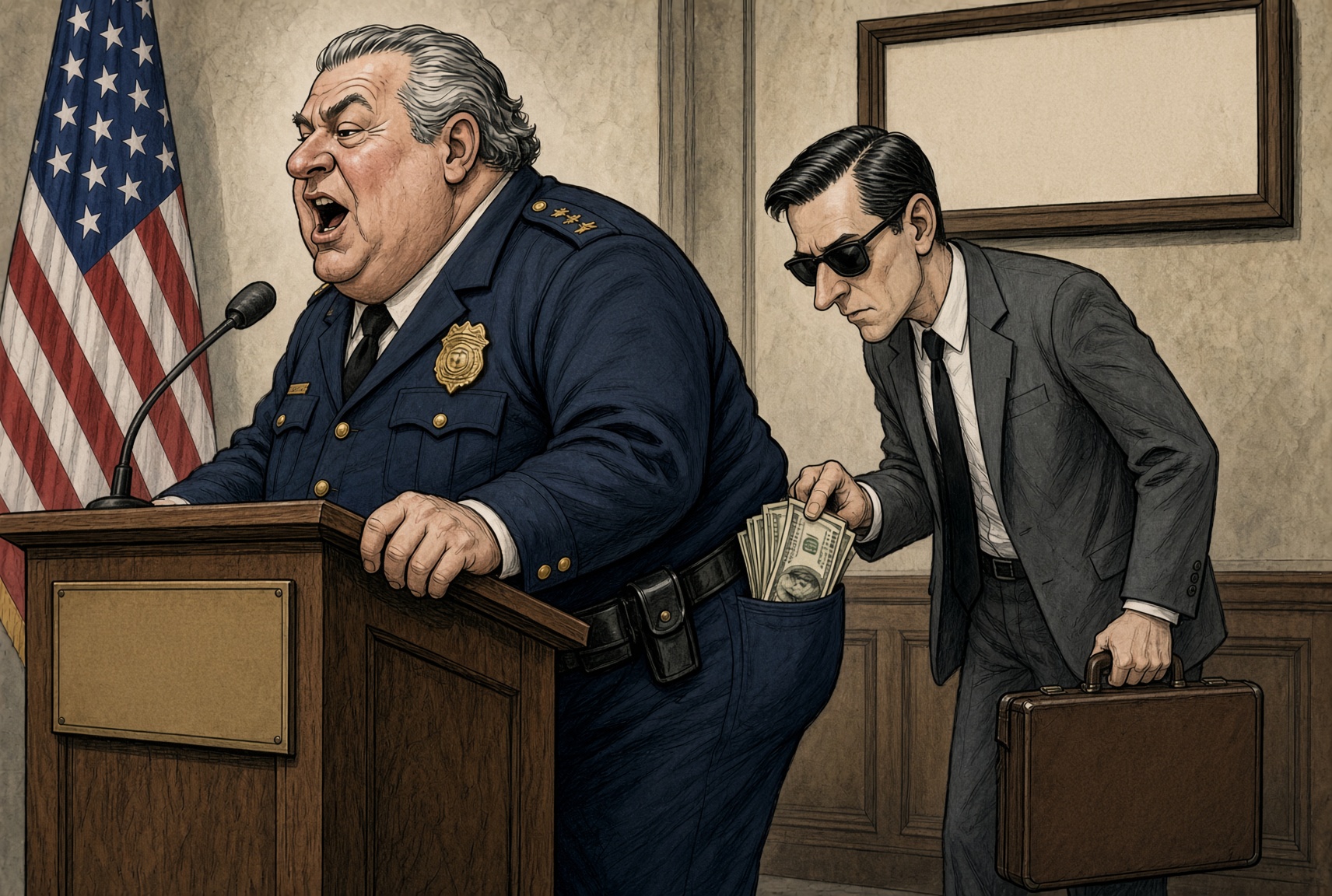
There is a simpler reason chiefs and sheriffs keep defending the cameras at council meetings. The systems often arrive already paid for. Byrne JAG, COPS, BJA, and state pass-throughs convert a multi-year vendor contract into a grant the city did not have to raise taxes to buy. If the subsidy dies, the department loses both the cameras and the federal money that covered them. It is the incentive written into how the equipment is purchased.
The next time a cop speaks at a local meeting defending Flock, ask if they are getting paid to say that. Follow the money.