
This post has been read 40 times!
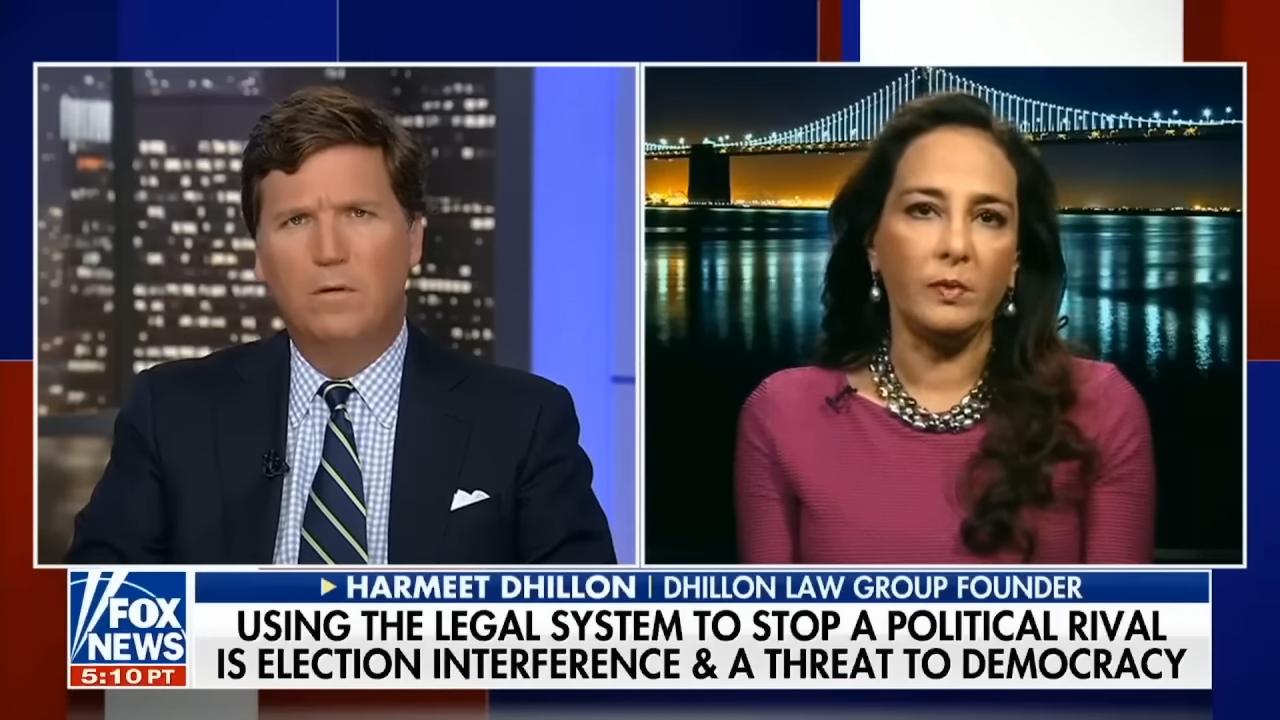 Defendant Tucker Carlson with his lawyer.
February 17, 2026- by Steven Greer
Five and a half years ago, I was preparing to sue Fox News and Tucker Carlson (Greer v. Fox Corp., No. 20-CV-5484 (S.D.N.Y. Sept. 7, 2022)) for several reasons. One key claim against Tucker Carlson involved his repeated theft of my ideas which he used to lead off episodes of his highly popular cable TV show.
I knew that mere ideas are not protected by copyright law. After searching the internet, I found a few California cases that do protect idea submissions. I discussed this with John Dellaportas, head of civil litigation at Emmet, Marvin & Martin, LLP, but he repeatedly insisted that ideas cannot be protected.
After nearly six years of litigation, the case has reached the California Supreme Court (Case No. S295235). I was right about everything.
California law clearly establishes that idea submissions such as pitching a screenplay to a studio are protected under implied contract law. As the Court of Appeal noted in its opinion, this stems from longstanding precedents like Desny v. Wilder from 1956, where the California Supreme Court held that “an implied-in-fact contract arises when a writer submits an idea to a producer with the reasonable expectation of payment if the idea is used.” This doctrine recognizes that “no express promise is needed; the contract is inferred from the parties’ conduct, such as the submission and subsequent use.”
I also argued that “industry custom” creates an implied contract when a major studio or in this case Tucker Carlson receives a pitched idea and then uses it. I did not need to prove a written agreement specifying price or other terms. Five years later, I know that substantial case law supports this position.
In Whitfield v. Lear, 751 F.2d 90 (2d Cir. 1984), applying California law, where the Second Circuit federal court reversed summary judgment for the defendants and held that an implied-in-fact contract could be inferred from the parties’ communications and industry custom in television, specifically noting that “the custom in the television industry is that a studio or producer not desiring to compensate for submitted material should reject it unread” and that “if a studio or producer is notified that a script is forthcoming and opens and reviews it when it arrives, the studio or producer has by custom implicitly promised to pay for the ideas if used.”
The key question in my case was whether sending emails to Tucker Carlson qualified as a valid industry pitch. The Second District Court of Appeal in California ruled in my favor there by explaining in the facts section of the opinion that I had indeed made standard industry pitches. That was a significant hurdle cleared.
From that opinion in Greer v. Carlson (Cal. Ct. App., 2d Dist., Div. Five, No. B343596, filed Jan. 16, 2026): “It is the industry standard to pay for ideas. Greer’s emails were standard industry pitches with the expectation of payment if they were used. Payment by Carlson was implied. Carlson’s show did not create original content, which was fine with Greer as long as credit was given to the original sources, but Carlson was not compensating Greer or providing recognition.”
The court could have added adjectives to express doubt about these allegations (such as “alleged,” “claimed,” or “purported”) if it viewed them skeptically. It did not.
Also, I am vindicated by my asserting that Carlson stole my ideas. Tucker Carlson has never once denied using my ideas throughout this entire litigation. He could have filed an affidavit stating he does not know who I am, but he did not. The courts have now established that there is no doubt he used my ideas.
Over these years, I have proven that I had novel valuable ideas that they were stolen by Tucker Carlson; that I presented them in accordance with normal industry standards; and that an implied contract was created. I told you so.
I recently lost the Second District appeal only because the judges imposed their own rules and criteria that conflict with at least five other cases. I am hopeful the Supreme Court of California will hear the case to resolve this conflict in the law. It is a long shot to be accepted by the Supreme Court, but I feel vindicated already because the core elements of my case have been proven.
I also no longer feel like a nut job for pursuing this. Several cases exist where professional writers had their ideas stolen and then for major productions. Like me, they litigated pro se and ultimately won (unlike me, so far).
For example, in Whitfield v. Lear, 751 F.2d 90 (2d Cir. 1984), a creative named Thurman Whitfield, a retired radio announcer, submitted his TV series idea “Boomerang” and the ideas were stolen by famous producer Normal Lear. Whitfield successfully appealed a summary judgment as a pro se plaintiff, like I am, in the Southern District of New York, like me, and then in the Second Circuit, just like me. This was way back in 1984. There are a few other examples like this as well.
The theft of a creative idea is different from the theft of an inanimate object. It is deeply personal and holds special value. I am not the only one who has become obsessed with chasing justice after having my creative ideas stolen.
In conclusion, if you are a creative person and your ideas are stolen by media professionals, you can sue to receive compensation. You have to show that you sent the ideas as a pitch, the recipients read the ideas, and then used them in a production. Professional producers are expected to know that it is industry custom to pay for ideas.
None of my fancy lawyers knew this. Almost no lawyer knows that, but my instincts were correct.