
This post has been read 581 times!
 July 20, 2026- by Steven Greer
Socialist Democrat (DSA) activist Melat Kiros stated to a fake audience recently that America will stop exploiting the world if enough immigrants from the “global south” get into elected office. This is a well-coached strategy taught in elite institutions steeped in critical theory dependency studies and neo-Marxist frameworks.
The strategy used by modern communists is not Marxism. It is Gramscian and the “long march through the institutions” combined with demographic transformation. Their goal is to control the hegemony (hearts and minds) rather than violently control the masses. They subvert, erode national sovereignty from within by flooding representation with “Global South” voices, and reframe America as an exploiter that must shift toward internationalist equity. They ultimately weaken the old order without traditional revolution. And they have succeeded fabulously.
Kiros states:
“There’s a certain reckoning that we are going to have to have with the global world order as it exists today and the way that it fundamentally will have to shift going forward.”
This is classic communist internationalism straight from the Manifesto and Lenin nations. The existing capitalist order must be transcended through revolutionary change toward a global system as seen in Skousen’s 45 goals. She is pushing UN-style world government over US sovereignty.
Then, “The responsibility that we have as Americans the recognition that is going to be required of us of the exploitative and extractive nature that we play on the global scale and the global stage.”
This mirrors Marxist Leninist anti-imperialism and dependency theory where the West is framed as the exploiting core draining the Global South periphery, demanding a fundamental reckoning and power shift to the oppressed.
Then, “And that means getting more immigrants into office. That means getting more people who have heritage in the global south into office.”
This reflects the Gramscian long march through the institutions and demographic transformation strategy: capture representation and power from within by elevating internationalist voices over national identity, aligning with communist goals of eroding sovereignty through infiltration and shifting electorates toward global solidarity.
Her entire speech was coached rhetoric from the Gramscian playbook.
Most people think that the key to understanding communism is to read the works of Marx, Trotsky, or Engels, and then books about it all, such as The Naked Communist. That is all Cold War thinking. Those forms of communism failed badly and they have regrouped into far more deadly subversive cancers.
The key to understanding communism today is to know the works of Gramsci.
In short, Gramscian thinking highlights that winning hearts and minds (hegemony) is essential for lasting change, not just violent military oppression. They are using a “long march through institutions”.
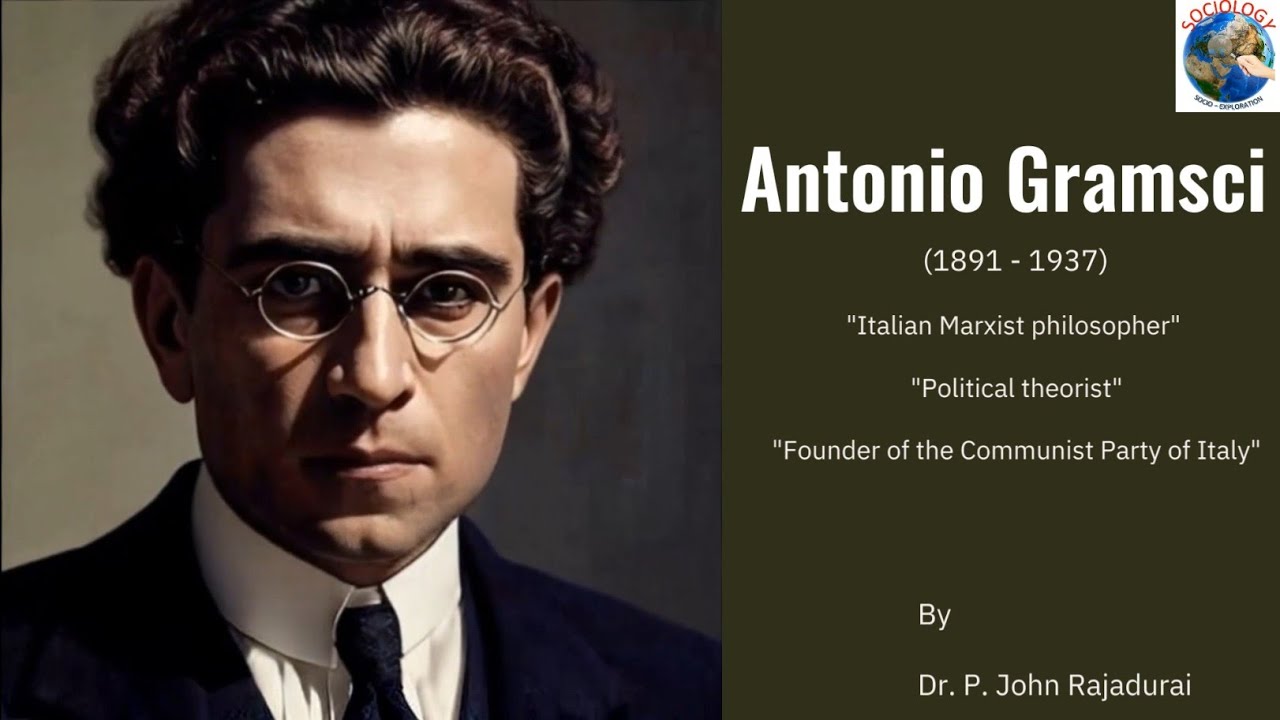
Who Was Antonio Gramsci?
Gramsci was a founding member and leader of the Italian Communist Party. He was imprisoned by Benito Mussolini’s fascist regime in 1926 and spent much of the rest of his life in jail, where he wrote the Prison Notebooks: a series of extensive notes on politics, culture, philosophy, and strategy. These notebooks became highly influential after his death.
Core Concept: Cultural Hegemony
Gramsci’s most famous contribution is the theory of cultural hegemony (or simply hegemony). In traditional Marxism, power was seen mainly as economic control (the “base”) with culture and ideas as secondary (the “superstructure”).
Gramsci flipped the emphasis:
- Ruling classes maintain power not just through coercion(police, army, laws — what he called “political society”) but through consent.
- They shape culture, education, media, religion, family, and common sense so that their worldview feels natural, inevitable, and in everyone’s interest — even to the working class.
When successful, subordinate groups voluntarily accept the system as “just the way things are.” This makes the ruling order more stable and reduces the need for constant force.
Key Related Ideas
- War of Position vs. War of Maneuver: In advanced Western societies (with strong civil society), revolutionaries shouldn’t just seize the state directly (“war of maneuver” like the Russian Revolution). They need a long cultural/intellectual struggle (“war of position”) to build counter-hegemony — alternative ideas, institutions, and “organic intellectuals” from within the working class.
- Historic Bloc: Alliances across classes and groups that sustain a particular hegemony.
- Civil Society: The arena (schools, media, churches, arts, etc.) where hegemony is built and contested.
Influence and Usage Today
“Gramscian” is often used to describe:
- Analyses of how power operates through culture and ideology (common in cultural studies, sociology, and political theory).
- Strategies for long-term cultural/political change by influencing institutions from within (sometimes called the “long march through the institutions”).
- Both positive applications (by leftists seeking counter-hegemony) and critical ones (by critics who see modern cultural shifts, identity politics, or “woke” movements as Gramscian in nature).
The whole thing is coached rhetoric from the playbook.