
This post has been read 36 times!
 November 17, 2026- by Steven E. Greer
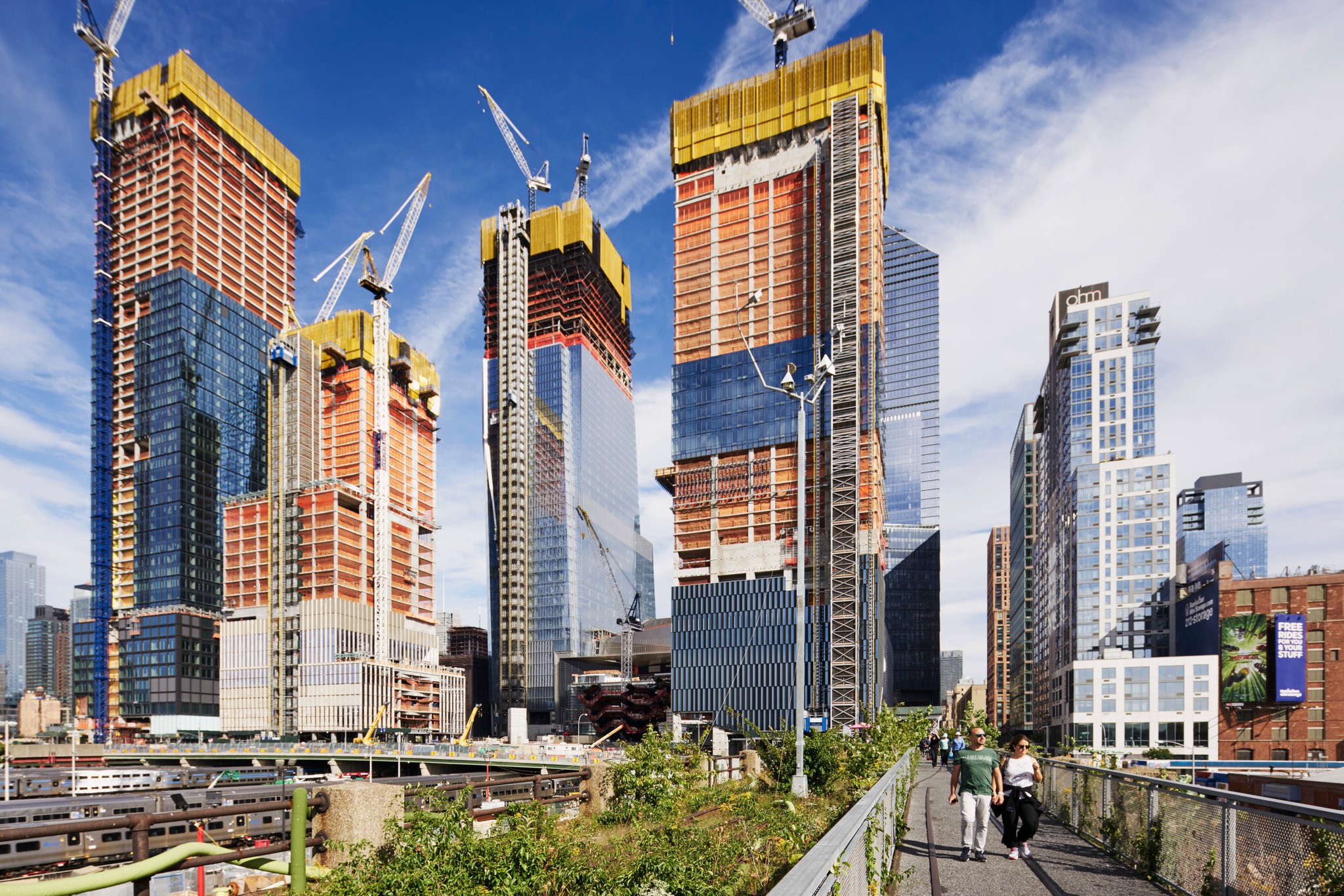
I live in a rapidly growing city where the housing developers are irresponsibly putting in new homes, despite no demand for them. Accompanying them are new restaurants, despite little demand. Well, another restaurant has closed shortly after opening. In New York City, the Hudson Yards mall is empty, like the Brookfield Place shops are in Lower Manhattan, etc.
Commercial real estate is a disaster again, just like it was from 2007 to 2012. The economy is in a depression and The White House is putting out fake economic numbers, but real estate executives live in a constant state of denial. When they go through a boom phase, like 2001 in certain cities in Florida, they lock in those high valuations to gain lucrative terms for financing in the future, even if there is no demand for the properties. Instead of lowering their rent prices to help shops stay alive, they keep them high. There are financial reasons for this seemingly irrational behavior.
The commercial real estate industry is funded by Private Equity and regional banks. They artificially prop up the valuations of their commercial portfolios by charging high rent. Their entire investment model is built on bogus valuations. They utilize temporary tax write-offs for the empty shops.
Private Equity would rather see the storefronts sit vacant than admit that their entire portfolio is worth a fraction of what they claim. If they lowered rent and the valuation fell, then the loans would trigger defaults and the house of cards would collapse.
That is why this AI-boom economy will implode worse than 2008. The leverage in this bubble is astronomical and it is all based of fraudulent Private Equity valuations.
AI Summary:
Commercial landlords keeping storefronts empty rather than lowering rent is driven by financial structures, tax incentives, and legal realities—not just stubbornness.
While it looks like pure arrogance from the outside, the economics of commercial real estate strongly incentivize landlords to leave a shop vacant rather than slash the rent.
The Banking Trap: Debt Covenants and Property Value
Commercial properties are valued entirely on the income they generate, calculated via a metric called Net Operating Income (NOI).
- The Valuation Collapse: If a landlord lowers the rent on a storefront from $10,000 a month to $5,000 to fill it quickly, the paper value of the entire building drops drastically. A $10 million building could suddenly be revalued by the bank at $5 million.
- Loan Defaults: Most commercial properties are heavily mortgaged. If the property value drops below a certain threshold, it triggers a loan covenant violation. The bank can legally demand the landlord immediately pay off the balance of the loan or seize the building. For the landlord, keeping a shop empty preserves the “ghost value” of the building on paper, keeping the bank at bay.
Do They Get Tax Write-Offs?
Yes, but not in the way most people think. Landlords do not get a direct tax credit just for having an empty space, but they can use the vacancy to aggressively offset their tax burdens.
- Writing Off Losses: The expenses required to maintain the empty space (property taxes, insurance, utilities, and marketing) can be deducted against the income generated by other occupied storefronts or properties in their portfolio.
- Depreciation: Landlords can claim “paper losses” through property depreciation, which shelters their other income from taxes, making the sting of a vacant storefront highly manageable.
The “Wait for a Whale” Strategy
Commercial leases are incredibly long—typically 5 to 10 years or more, unlike 1-year residential leases.
If a landlord locks in a struggling local business at a deeply discounted rate, they are stuck with that low revenue stream for a decade. Landlords would often rather leave a space empty for two years waiting for a “whale” tenant—like a Starbucks, Chase Bank, or national retail chain—that can afford the premium rate and guarantees decades of reliable corporate backing.
Are you noticing a lot of independent shops closing down in that center, or are national chains pulling out too? If you’d like, you can share the name of the retail center or your city, and I can look into what’s driving the vacancies there.
The system relies on a network of traditional regional banks, insurance companies, and Wall Street investors—not a single entity acting out of sheer stupidity. They are all trapped in a legal and financial framework created during economic booms, and no one wants to be the first to blink and take a massive loss.
The commercial real estate (CRE) debt ecosystem reveals exactly who is issuing these loans and why the valuations remain artificially detached from the reality on the street.
- Who is Giving the Loans?
Private equity plays a major role, but they are far from alone. The $5+ trillion commercial mortgage market is divided among several key players: [1]
- Regional and Community Banks: These institutions handle roughly 70% of all bank-held commercial real estate debt. They are heavily exposed to local retail strips and office buildings. [1, 2]
- Wall Street (CMBS): Commercial Mortgage-Backed Securities bundle thousands of storefront loans into bonds and sell them to global investors. Once a loan is locked into a CMBS pool, changing the terms or lowering the rent requires approval from a robotic third-party “servicer” bound by strict legal contracts, making common-sense adjustments nearly impossible. [1]
- Insurance Companies & Pension Funds: These groups seek ultra-stable, multi-decade cash flows to pay out life insurance policies and retirements, heavily investing in “premium” retail anchors. [1]
- Private Credit / Debt Funds: These private equity arms act as shadow lenders. They step in when banks refuse to lend, charging high interest rates for short-term “bridge loans” on struggling properties.[1, 2, 3]
- Who Values the Properties So High?
The valuation is not pulled out of thin air by a single developer; it is verified by independent commercial appraisers hired by the lenders. The flaw lies in the math formula they are legally required to use, known as the Income Approach. [1, 2, 3, 4]
Instead of looking at a building and saying, “This place is half-empty and looks dead,” the formula dictates:
\(\text{Property\ Value}=\frac{\text{Net\ Operating\ Income\ (NOI)}}{\text{Capitalization\ Rate\ (Cap\ Rate)}}\)
Under this formula, value is tied strictly to the advertised rental rate rather than actual occupancy. If a landlord expects to charge $100/sq ft, the appraiser must calculate the building’s worth based on that metric. Dropping the rent to a realistic $50/sq ft instantly cuts the paper value of the building in half. [1, 2]
- The “Denial” is Actually Self-Preservation
Landlords and banks maintain these high valuations to prevent a cascading financial collapse:
- The Bank’s Dilemma: If a regional bank admits the retail center it financed is worth $20 million instead of $40 million, it must immediately report a massive paper loss. This tied-up capital prevents them from issuing new loans, lowers their stock price, and risks regulatory crackdowns. [1, 2, 3]
- The Landlord’s Dilemma: A lower valuation triggers a “cash trap” or margin call from the lender. The bank can seize all incoming rent or demand the landlord immediately inject millions in cash to restore the loan-to-value ratio. [1, 2, 3]
Landlords keep storefronts empty because a vacant sign represents a temporary loss of income, whereas lowering the rent can trigger an immediate foreclosure. They remain in a state of denial because the financial system penalizes reality and rewards the illusion of premium value. [1]