
This post has been read 687 times!
 April 21, 2026- by Steven E. Greer
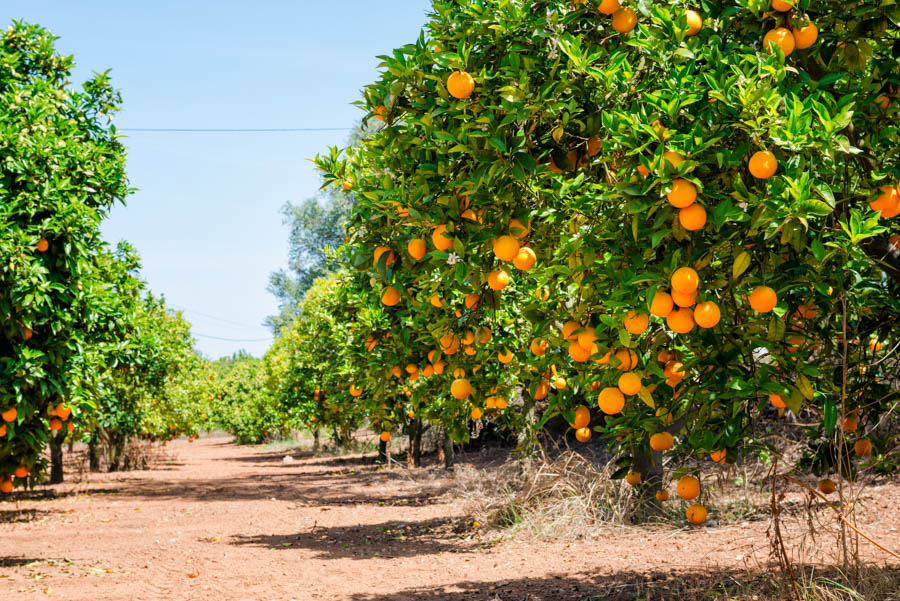
I have lived for almost a decade in an area of Florida that was once nothing but the Everglades and citrus groves as far as the eye could see, and have an emotional attachment to orange trees. I was imprinted as a baby when our family drove from Ohio to Florida on vacations and remember those juicy oranges hanging on the trees. Our hotels had them on the premises. Orange stands were everywhere.
Sadly, those orange trees are now almost all gone, and few people notice or talk about it. Recently, another thousand acres near me has been converted into a golf course and housing development. I like to juice my own orange juice and I cannot even find bags of oranges in the stores.
Why has this happened? Was it the usual case of real estate developers bribing politicians, or was there some sort of incurable virus or bug killing the trees?
Florida’s orange industry has collapsed dramatically. Once proudly known as the Citrus State, Florida now has basically no orange groves or orange trees left in any meaningful commercial sense. Orange output has plummeted from around 200 million boxes in 1970 to a forecast of roughly 12.2 million boxes for the 2025-2026 season: a decline of more than 94%. Florida’s share of U.S. orange juice production has fallen from roughly 80 percent just a few years ago to about 20 percent today. Orange acreage has shrunk to approximately 184,000 acres, down from a peak of over 832,000 acres.
Citrus canker, a bacterial disease, supposedly played a major early role as the first major “scare” that devastated the industry. It had previously been eradicated from Florida after an earlier outbreak but re-emerged in the mid-1990s (with a significant outbreak in Miami in 1995). In response, the state (Florida Department of Agriculture and Consumer Services) and the USDA launched an aggressive statewide eradication program that ran from the late 1990s into the mid-2000s. The program was overseen by Governor Jeb Bush, who in 2002 signed legislation that formalized and greatly expanded the controversial “1,900-foot rule.”
This rule required the destruction of every citrus tree—infected or healthy—within a 1,900-foot radius of a single confirmed infected tree (expanded from an earlier smaller radius). It was strongly supported and promoted by Florida Agriculture Commissioner Bob Crawford and citrus industry lobbyists, who pressured the Bush administration to protect the state’s large commercial groves and multi-billion-dollar citrus economy at all costs. Government crews, armed with countywide search warrants, entered private property to remove trees, including millions of healthy commercial, nursery, backyard, and dooryard trees.
By 2006 the program had destroyed more than 16 million trees. It was highly controversial. Initial compensation was minimal (often just small Walmart gift cards for homeowners), sparking numerous lawsuits from growers and residents who argued it constituted an unconstitutional taking of private property without just compensation. Courts later ordered the state to pay millions in settlements years after the fact. The program was abandoned in 2006 after it proved ineffective (canker continued to spread, especially after storms), yet it removed vast numbers of trees, imposed huge costs, and added significant stress to the industry at a critical time.
The resulting cleared or economically devastated former citrus land later became prime targets for real estate development. Then, after the 2006-2008 Wall Street financial crisis, deregulation under Governor Rick Scott dismantled growth-management protections. Infrastructure and schools were no longer required to be in place before developing houses. Developers rapidly converted the sandy upland soils (previously occupied by groves) into housing subdivisions, stores, solar farms, and data centers.
Then came a new boogeyman as a pretext to accelerate the removal of trees and clear the way for other uses. Citrus greening disease (Huanglongbing or HLB) is a completely separate and distinct bacterial disease from canker. HLB is caused by the phloem-limited bacterium Candidatus Liberibacter asiaticus and is spread by the Asian citrus psyllid, an insect that arrived in Florida around 1998. The disease was first officially detected in Florida in 2005.
While the ongoing Florida citrus collapse is officially blamed on this real disease, the question remains whether HLB is the true cause of the total industry wipeout or whether it has served as a convenient pretext following the earlier canker scare.
HLB is described as incurable. Once a tree is infected, it slowly chokes the vascular system, and the tree eventually becomes unproductive and dies. Symptoms typically appear three to five years after infection. Today, infection rates in Florida’s remaining citrus operations are extremely high; on average, more than 90% of acres and roughly 80% of trees are affected, with many growers reporting 100% infection across their groves. Early heavy pesticide spraying failed to stop the spread, and hurricanes repeatedly carried the psyllid across the state. The only current treatment is expensive trunk injections of the antibiotic oxytetracycline (OTC), which provides temporary relief for a few months but is not a cure. Researchers are developing genetically modified resistant trees, but they will not be commercially available for another 10–18 years.
However, real estate developers played a major role in accelerating the demise of citrus. After the 2007 housing crash and Great Recession, Florida dismantled key growth-management protections. It abolished the Department of Community Affairs, and in 2011 Governor Rick Scott gutted the “concurrency doctrine” that had required infrastructure (water, sewer, schools) to be in place before new development was approved. This deregulation opened the floodgates for suburban sprawl. Struggling growers, already losing money because of canker-related losses, greening, hurricanes, and other pressures, received high buyout offers from developers and sold off land en masse. Major homebuilders such as DR Horton, Pulte, Mattamy, and Lennar moved in rapidly. Even the largest remaining citrus operation, Alico, announced in January 2025 that it was exiting orange production entirely on its tens of thousands of acres (which had accounted for a significant share of Florida’s remaining output) and converting substantial portions of that land into new residential and commercial “villages,” including a 9,000-home development. Roughly three-quarters of Florida’s citrus growers have now left the industry.
Other major pressures include a historic multi-day freeze in January–February 2026, the worst drought in 25 years, and repeated devastating hurricanes (Irma in 2017, Ian in 2022, and others) that further stressed already weakened trees. Those were quite likely man-made acts caused by chemtrails and geoengineering.
The supporting infrastructure has also disintegrated. The number of packinghouses has dropped from 88 in the late 1980s to just eight today. Processing plants have fallen from 53 in 1977 to only four. Most juice now labeled as “Florida” is actually imported from Brazil and Mexico and stored in former Florida facilities. Foreign ownership of processing plants increased sharply after the 1990s, and Tropicana was sold to French private-equity firm PAI Partners in 2022, adding further financial strain.
Longer-term factors that contributed to the decline include decades of heavy glyphosate and chemical use that degraded soil health and left trees vulnerable to disease, and changing consumer habits that reduced breakfast juice consumption.
Florida’s once-dominant citrus industry (which at its peak grew on 832,000 acres and supplied 78 percent of U.S. citrus) has been almost entirely destroyed. The combination of the canker eradication campaign (overseen by Gov. Jeb Bush and backed by citrus industry lobbyists) that destroyed millions of trees and cleared land for later real estate conversion, repeated weather disasters, chemical overuse destroying the soil, shifting markets, and aggressive suburban sprawl has effectively ended the era of Florida as the citrus capital of the world.
Next up for the shadow forces stealing land around the world is Brazil, the world’s leading supplier of citrus. The HLB greening infection has been unleashed there too.
_______________________
- Florida’s orange harvest has shrunk to its smallest size in almost a century. The USDA’s latest forecast puts this season at just 12 million boxes, a level the state hasn’t seen since 1930. Citrus greening disease, repeated hurricanes, and land sold off for development have quietly emptied out groves that once defined Florida. Production is down more than 90 percent from its peak, and most of the juice in your carton now comes from Brazil. Localize helps you find real Florida citrus.